
 Image 1 of 3
 Image 2 of 3
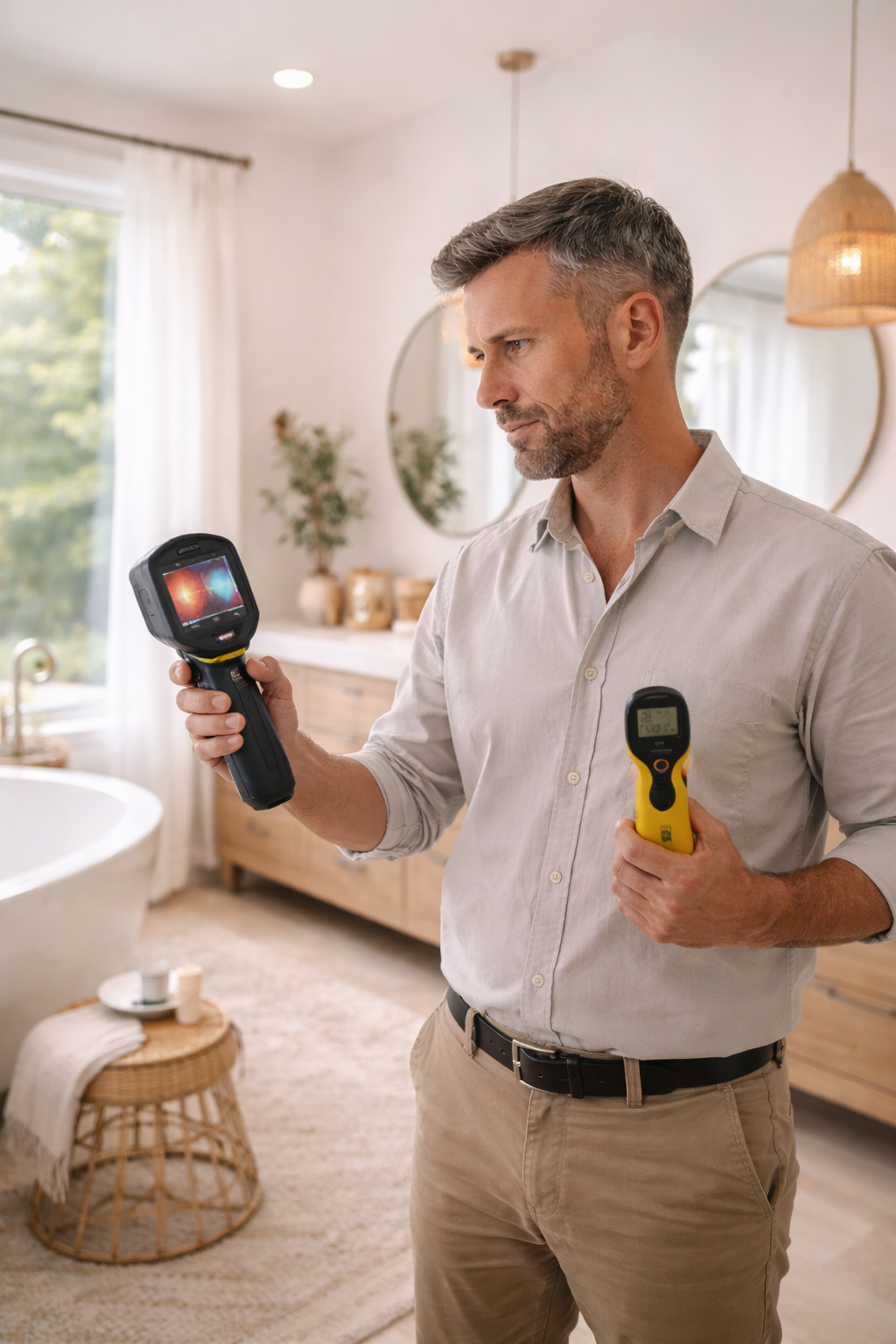 Image 3 of 3
Our Healthy Home Assessment evaluates the most common environmental stressors inside your home — moisture, mold risk, and indoor air quality — using professional-grade tools and a practical, biology-focused lens.
We begin by assessing water intrusion and moisture conditions, as excess moisture is the primary driver of mold growth and building deterioration. Using a combination of moisture meters, thermal imaging, and visual inspection, we identify areas of concern, active water damage, and conditions that may support hidden mold growth.
We then perform an indoor air quality evaluation, measuring key pollutants that impact respiratory health, cognitive function, and long-term wellness, including:
PM2.5 and PM10 (fine and coarse particulate matter)
Total Volatile Organic Compounds (TVOCs)
Formaldehyde (HCHO)
Radon (when applicable or requested)
Results are interpreted in context — not in isolation — considering building design, ventilation, materials, occupant habits, and seasonal conditions.
This assessment is not about fear or one-size-fits-all solutions. It’s about understanding what matters most in your specific home and creating a clear, prioritized action plan that supports cleaner air, healthier living spaces, and long-term durability.
Clear explanation of findings in plain language
Identification of high-priority moisture, mold-risk, and air quality issues
Practical recommendations for remediation, ventilation, filtration, and material changes
Guidance on when additional testing or professional services are warranted
Homes with past or current water damage
Musty odors or unexplained respiratory symptoms
Families concerned about indoor air quality and toxin exposure
New homeowners seeking baseline environmental insight
Renovations or remediation planning
Our Healthy Home Assessment evaluates the most common environmental stressors inside your home — moisture, mold risk, and indoor air quality — using professional-grade tools and a practical, biology-focused lens.
We begin by assessing water intrusion and moisture conditions, as excess moisture is the primary driver of mold growth and building deterioration. Using a combination of moisture meters, thermal imaging, and visual inspection, we identify areas of concern, active water damage, and conditions that may support hidden mold growth.
We then perform an indoor air quality evaluation, measuring key pollutants that impact respiratory health, cognitive function, and long-term wellness, including:
PM2.5 and PM10 (fine and coarse particulate matter)
Total Volatile Organic Compounds (TVOCs)
Formaldehyde (HCHO)
Radon (when applicable or requested)
Results are interpreted in context — not in isolation — considering building design, ventilation, materials, occupant habits, and seasonal conditions.
This assessment is not about fear or one-size-fits-all solutions. It’s about understanding what matters most in your specific home and creating a clear, prioritized action plan that supports cleaner air, healthier living spaces, and long-term durability.
Clear explanation of findings in plain language
Identification of high-priority moisture, mold-risk, and air quality issues
Practical recommendations for remediation, ventilation, filtration, and material changes
Guidance on when additional testing or professional services are warranted
Homes with past or current water damage
Musty odors or unexplained respiratory symptoms
Families concerned about indoor air quality and toxin exposure
New homeowners seeking baseline environmental insight
Renovations or remediation planning